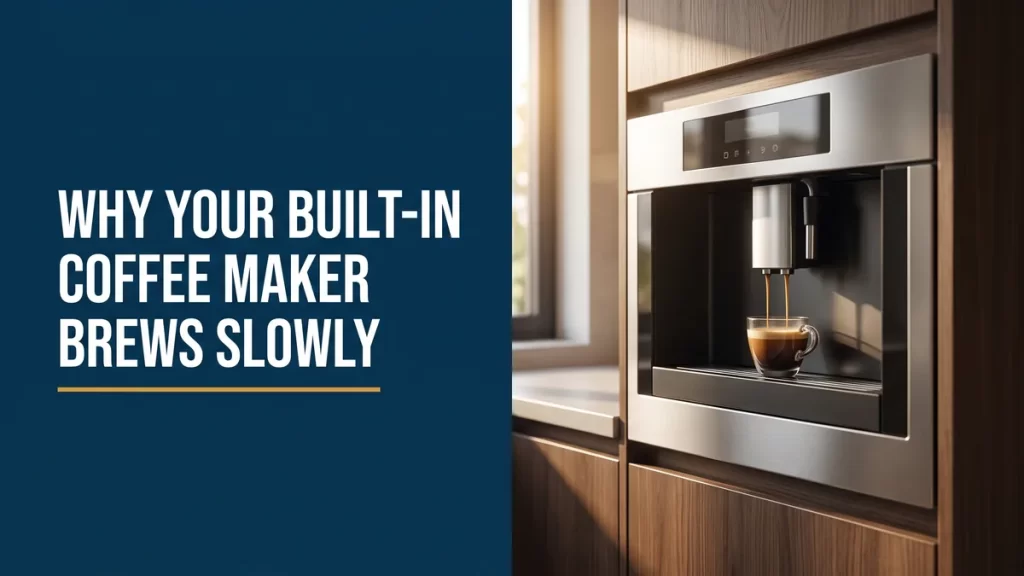
Your morning cup used to land in under a minute. Now the machine grinds, hisses, and dribbles out a thin stream while you wait. Having a built in coffee maker brewing slow is a common issue that often feels like a major breakdown, but it is usually a simple water flow restriction. Before you schedule a built-in coffee machine repair in Halifax, it helps to understand what causes the delay and how to fix it.
This guide explains why water flow drops, what safe steps you can take at home, and when a slow brew requires professional repair. Electric components and sealed brew groups are best left to a trained technician.
Built in coffee maker brewing slow: the usual culprits
A coffee machine relies on a small pump to push hot water through a water line: the tank, internal valves, the heating circuit, and finally the brew group and coffee grounds. A blockage anywhere in this path slows down the entire brewing cycle. Common causes include:
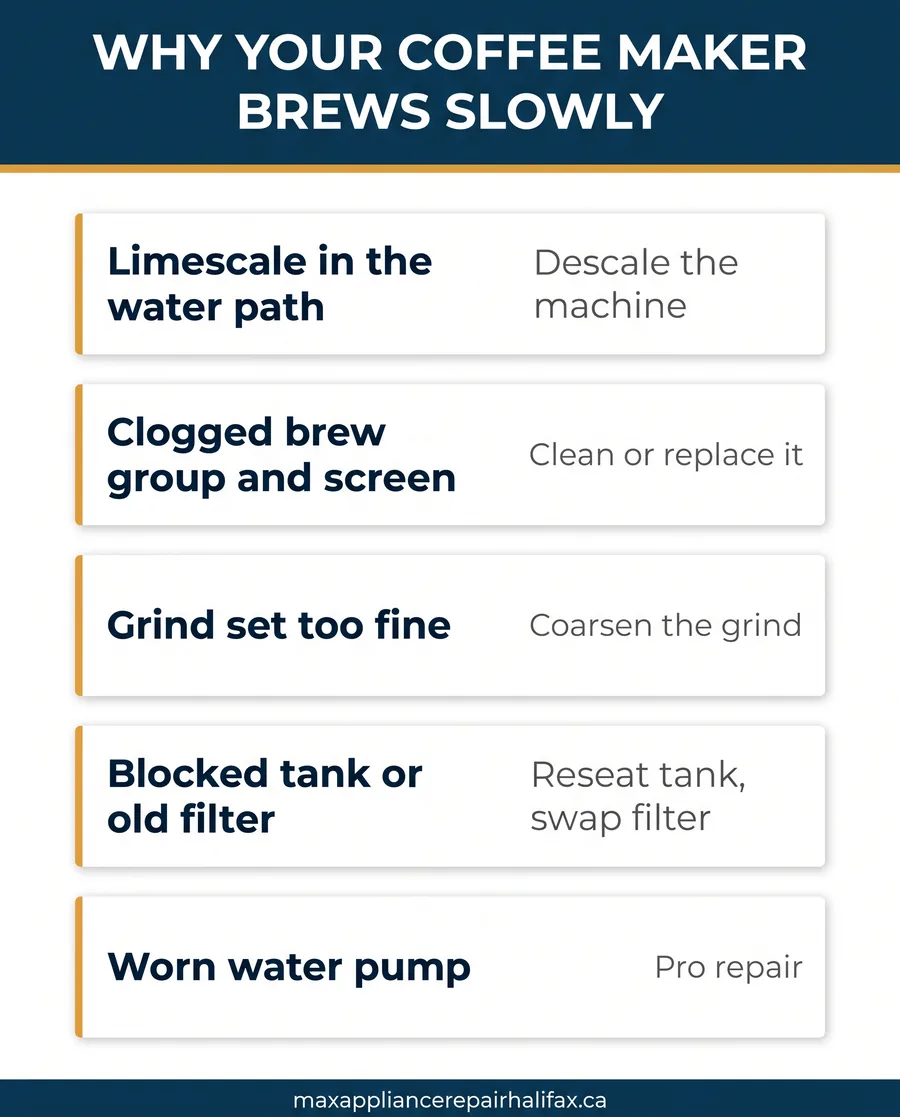
- Limescale buildup narrowing the water lines, heating element, and brew unit.
- A grind size that is set too fine, compacting the coffee puck and restricting water passage.
- A clogged brew group or shower screen coated in old coffee oils and fine residue.
- A blocked water intake, dirty tank valve, or an expired water filter.
- A failing water pump losing pressure as it wears down over time.
Quick take
If your machine has slowed down gradually over several months, scale buildup and coffee oils are the primary suspects. Thorough descaling and cleaning resolve most flow problems. A sudden, dramatic drop in flow or an accompanying error code typically indicates an internal mechanical failure.
Why limescale is the number one cause
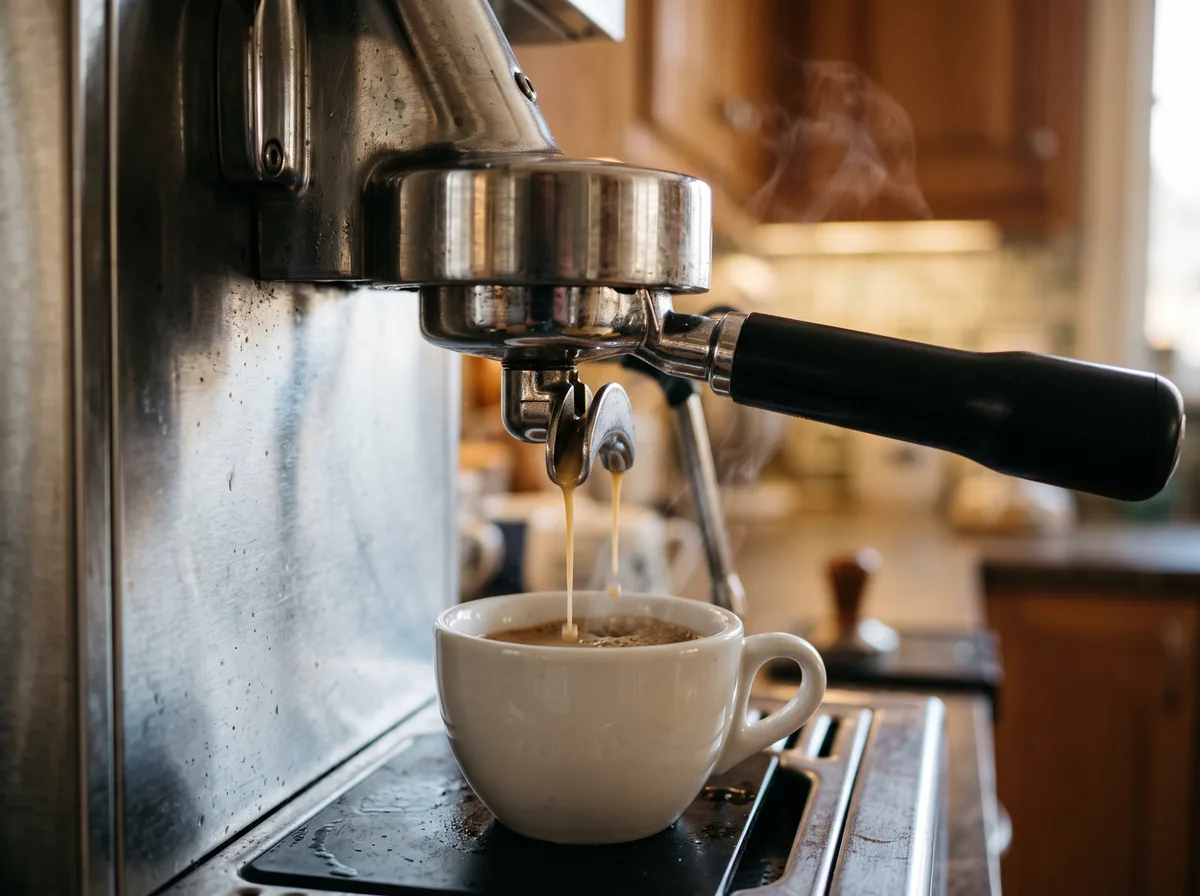
As water heats inside the unit, dissolved minerals leave behind scale deposits. These minerals coat the heating element and narrow internal lines. Because coffee machines have very small internal tubes, even minor scale buildup causes a built in coffee maker brewing slow performance issues and extends brewing times. Scale also insulates the heater, leading to cooler beverage temperatures.
Ignoring descaling alerts leads to restricted flow and potential pump or heating element failure. Performing routine maintenance protects internal parts and maintains normal brewing speeds.
Did you know
Descaling and cleaning the brew group address two different issues. Descaling removes mineral scale from internal plumbing, while cleaning the brew group removes accumulated coffee oils and grounds. Both maintenance steps are necessary to restore proper water flow.
Safe checks you can do before calling a pro
- Run a full descale cycle: Use the recommended descaling solution and follow the complete system program. Heavy scale accumulation may require a second pass.
- Clean the brew group: If removable, rinse the assembly under warm water, clean the shower screen, and brush away residual oils and grounds.
- Adjust the grind setting: Select a coarser grind setting. Fine grounds can compact and block water flow through the brew basket.
- Inspect the water tank and filter: Ensure the tank is properly seated to open the intake valve fully. Replace old water filters that may restrict intake flow.
- Clean intake valves: Clear away debris or scale around the tank connections to ensure smooth water transfer.
- Contact a technician if issues persist: If the unit brews slowly after cleaning, an internal pump, heater, or valve defect requires professional repair.
Pro tip
Maintain a regular descaling schedule rather than waiting for flow to drop. Descaling every four to six weeks prevents mineral accumulation and protects major components like the water pump and heating unit.
Halifax water, wells, and your coffee machine
Water hardness affects how rapidly scale forms in appliances. Municipal water supplied through Halifax Water has moderate mineral content, leading to gradual scale formation. However, homes in areas like Tantallon, Timberlea, and Hammonds Plains using private wells often have higher mineral levels. Hard well water significantly accelerates mineral deposits inside appliances.
Using built-in water filtration systems or pre-filtering well water minimizes scale accumulation, protecting components and maintaining standard brew speeds.
Save your money
A slow unit rarely requires complete replacement. Routine descaling, brew-group cleaning, and grind adjustments resolve most issues. Professional repair remains cost-effective compared to replacing a built-in appliance even when component replacement is required.
What a slow-brew fix usually costs
Addressing flow issues early keeps maintenance costs low. Below is an overview of common causes, solutions, and estimated repair costs in the Halifax area:
| Symptom | Likely cause | Fix | Rough cost |
|---|---|---|---|
| Gradual slowdown, weaker crema | Limescale in the water path | Descale, repeat if needed | $15 to $30 (DIY) |
| Slow with bitter, muddy coffee | Clogged brew group and screen | Clean or replace brew group | $0 to $120 |
| Slow only when you grind fine | Grind too fine, puck too tight | Coarsen the grind | $0 (DIY) |
| Weak stream after descaling | Worn or failing water pump | Pump diagnosis and replacement | $150 to $320 |
| Slow, cool, and throwing an error | Scaled or failing heater | Technician diagnosis | $160 to $350+ |
Download the free quick guide
A one-page checklist for a built in coffee maker brewing slow, covering safe maintenance steps and when to call a technician.
Frequently Asked Questions
If maintenance and adjustments do not restore normal operation, internal components such as the water pump or heating unit may require service. Max Appliance Repair Halifax provides diagnostic and repair services for built-in coffee machines across Halifax, Bedford, Dartmouth, Tantallon, Timberlea, and surrounding areas. Book a visit today to schedule professional service.