Last updated: August 4, 2026
Most Halifax homeowners assume that because HRM tap water is “soft” they have nothing to worry about. That is half right. Pockwock supply water is genuinely soft. But thousands of Halifax-area homes get their water from private wells in Hammonds Plains, Tantallon, Fall River, Lakeside, Beaver Bank, and the rural fringe of HRM, and those wells run from moderately hard to very hard depending on the bedrock. Even on the municipal supply, the mineral profile changes by neighbourhood. After 16 years of washer repair and dishwasher repair calls across HRM and the South Shore, here is what Halifax water is actually doing to your appliances and how to slow it down.
Pockwock vs private well: the real Halifax water story
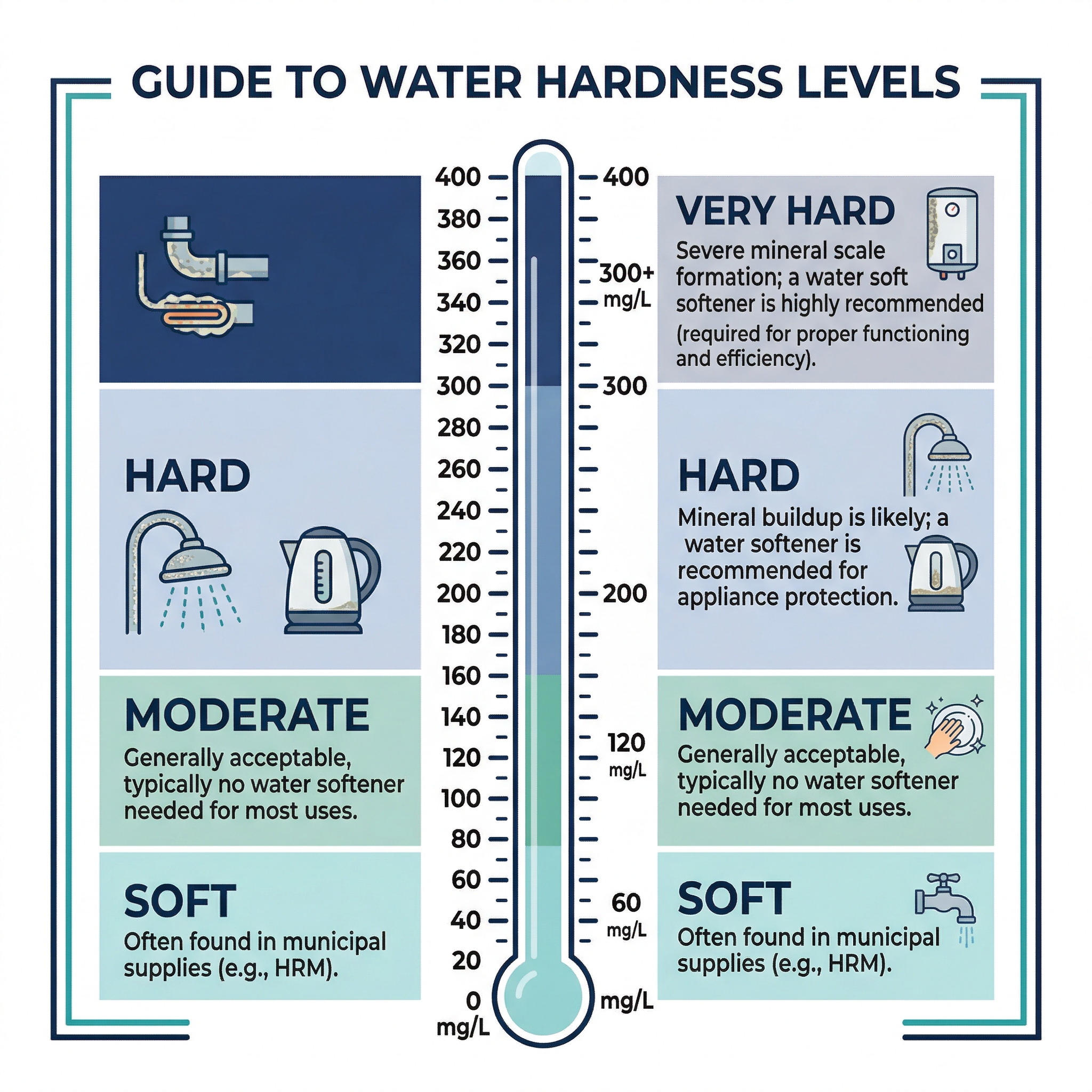
HRM gets most of its drinking water from the Pockwock Lake supply, which Halifax Water reports at roughly 10 to 20 mg/L of calcium carbonate hardness. That is genuinely soft and your dishwasher will be happy. Lake Major supplies Dartmouth and is similarly soft. But once you go off-grid onto a private well, the numbers change fast. Slate and granite bedrock wells in the Hammonds Plains corridor often test 150 to 300 mg/L. Limestone-influenced wells in some pockets can hit 400 mg/L or higher. That is the territory where appliances start failing in distinctly hard-water ways. The Nova Scotia Environment well water guidance recommends water testing every two years for private wells, and the hardness number on that test is the one your appliance technician cares about.
What hard water actually does inside an appliance
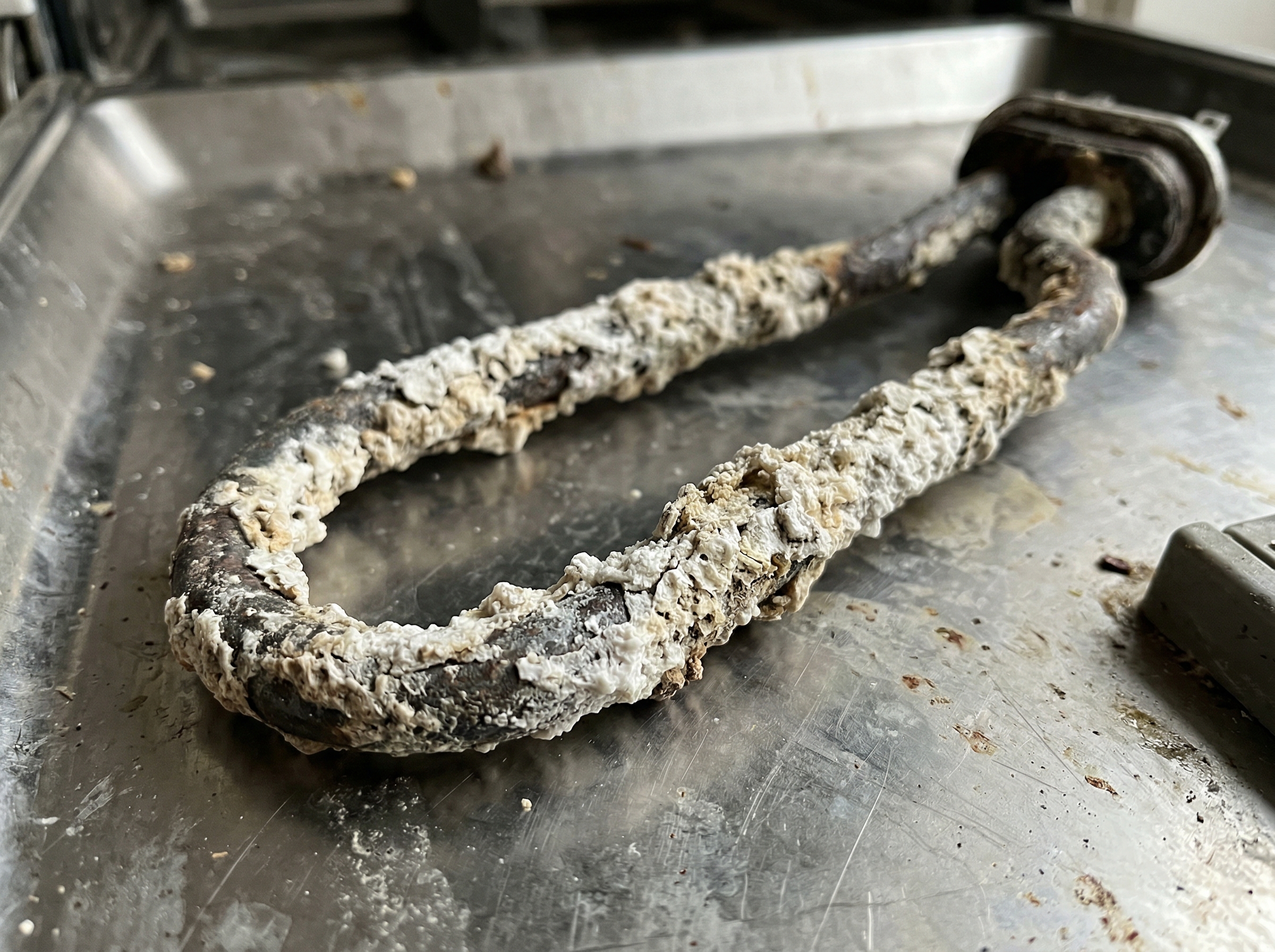
Calcium and magnesium dissolved in your water do not stay dissolved when the water is heated. They precipitate out as scale, a chalky white deposit that bonds to any heated surface. Inside your appliances, that means heating elements, spray arms, water inlet valves, pump impellers, and the inside walls of the tub. Scale insulates heating elements from the water around them, so the element runs hotter to deliver the same wash temperature, then burns out years early. Scale clogs spray arm holes and inlet valves, restricting water flow and triggering error codes. Scale roughens pump impellers and chews up seals.
Dishwasher damage signs you can spot yourself
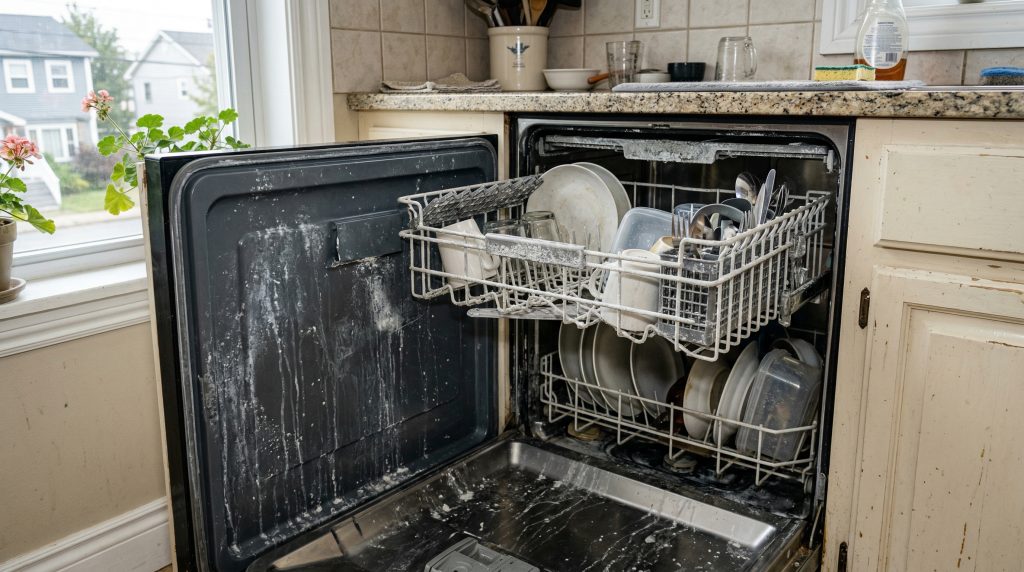
- White film on the inside of the door and the upper rack. Pull the upper rack and look at the back wall above the upper spray arm. White cloudy buildup that does not wipe off easily is calcium scale.
- Glasses come out spotty even with good detergent and rinse aid. Spotty glassware is the earliest visible symptom and the easiest to ignore.
- The dishwasher takes longer to finish a cycle than it used to. Modern dishwashers extend the cycle when the heating element cannot bring the water to temperature on schedule. That is the unit compensating for scale insulation on the element.
- Intermittent E1, E15, or H20 type fill codes. Scale on the inlet valve restricts water flow below the threshold the control board expects.
- Audible whine from the wash pump that was not there a year ago. Scale on the impeller throws the rotation off balance.
Washing machine damage signs
- Whites going grey and towels feeling stiff. Scale binds with detergent, leaving residue in fabric. You add more detergent to compensate, the residue gets worse.
- Visible scale on the rubber door gasket of a front-loader. White crust around the lip of the gasket means scale is also building inside the tub and on the heating element.
- Heating element burning out before 8 years. A front-load washer heating element should last 12 plus years on soft water. We routinely replace them at 5 to 7 years on private wells in Hammonds Plains and Tantallon.
- Solenoid water inlet valves clogging and triggering “long fill” or LE error codes. Same mechanism as dishwasher inlet valves.
What to do about it
Step 1: actually test your water
If you are on a private well, send a sample to a Nova Scotia accredited lab and get the hardness number plus iron, manganese, and pH. If you are on HRM municipal supply, you can pull the latest hardness reading from Halifax Water without testing. Knowing the number tells you whether you need a softener at all and how much capacity you need.
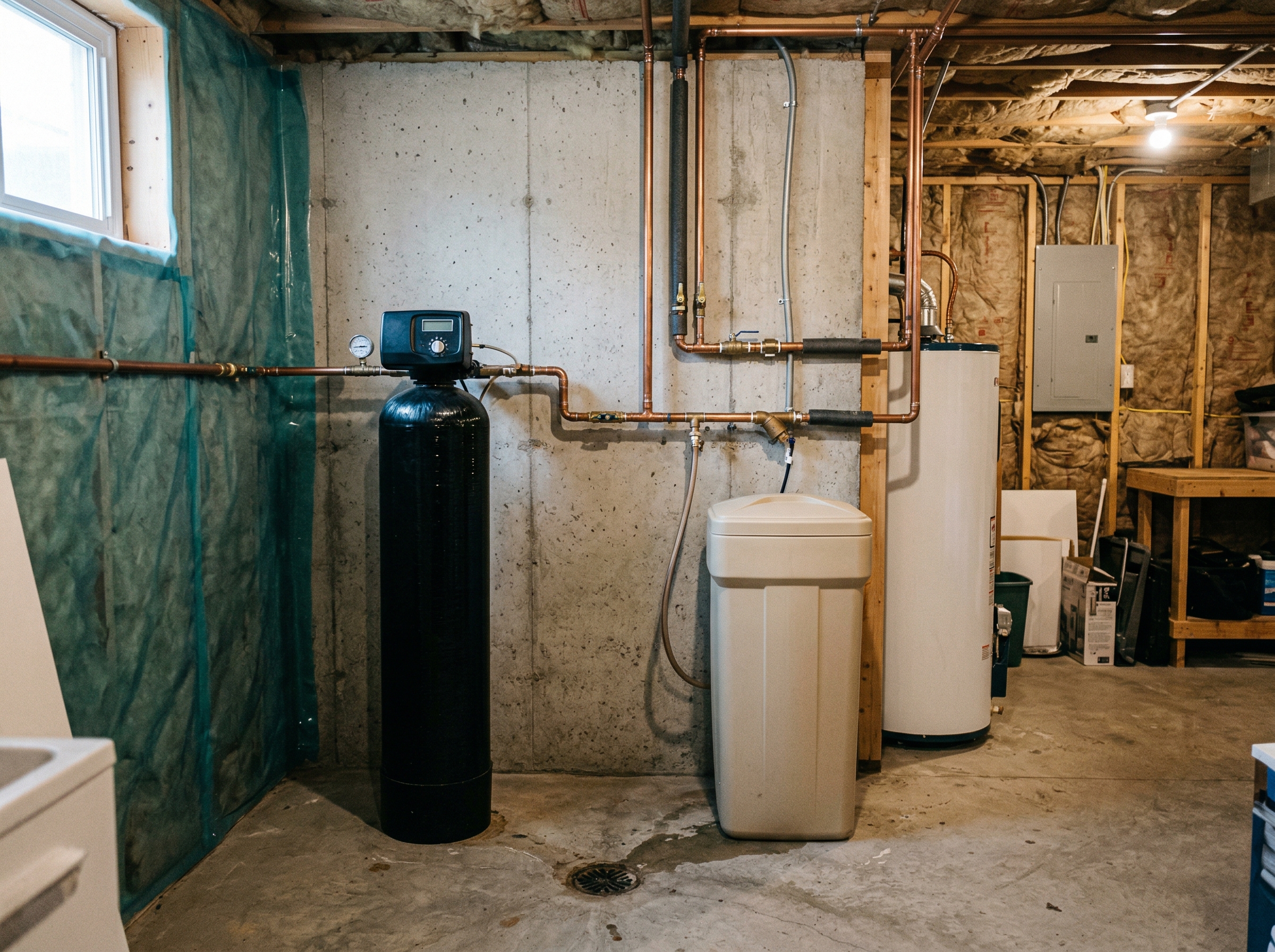
Step 2: install a whole-house softener if your hardness is over 120 mg/L
Below 120 mg/L (about 7 grains per gallon), you can usually manage with appliance maintenance alone. Above that number, a properly sized ion exchange softener pays for itself in extended appliance life inside 5 years. A typical Halifax-area whole-house softener installed runs $1,800 to $3,500. The math: at 250 mg/L hardness, untreated water shortens dishwasher and washer life by roughly 30 percent and shortens heating element life by 50 percent. One avoided heating element replacement plus one avoided early appliance replacement covers the softener.
Step 3: descale the appliances you already have
For dishwashers, run a cycle with a citric acid based dishwasher cleaner once a month. Avoid the hardware store products that use hydrochloric acid, which attack rubber seals. For front-load washers, run a hot tub clean cycle with a washing machine descaler monthly. Both are cheap, both work, neither will reverse advanced scale damage but both will stop the progression.
Step 4: use the rinse aid dispenser on your dishwasher, every cycle
Rinse aid is not a luxury and it is not just for spot prevention. The surfactant in rinse aid breaks the surface tension of the rinse water so it sheets off dishes instead of beading and leaving mineral residue. Even on Pockwock soft water, rinse aid helps. On hard well water it is non-negotiable.
Step 5: use the right amount of detergent for your hardness
Detergent dosing on the box is based on average North American water hardness, around 120 mg/L. If you are softer than that you are using too much detergent and getting residue. If you are harder you are using too little and getting scale plus poor cleaning. Most appliance owner manuals have a hardness adjustment table buried in the back. Use it.
Repair vs replace when scale damage is advanced
When a dishwasher heating element burns out from scale on a 6 year old machine, the element itself is a $80 to $180 part and a 90 minute service call. Worth fixing. When the heating element burns out on a 12 year old dishwasher and the wash pump is also whining and the inlet valve is clogged, you are stacking three repairs on a unit that is about to need a fourth. That is the replacement conversation. The honest cutoff in our shop is: under 8 years, repair almost always wins; 8 to 11 years, depends on which combination of parts has failed; over 11 years, replacement is usually the smarter spend, especially if the underlying water issue is not being addressed.
Frequently asked questions
Is HRM tap water hard enough to damage my dishwasher?
No. Pockwock and Lake Major supply water is genuinely soft, around 10 to 20 mg/L. If you are on HRM municipal water and seeing scale damage, it is from a previous water source or from very long-term cumulative buildup. Most municipal HRM customers will never need a softener.
I am on a well in Hammonds Plains. Do I need a water softener?
Probably yes. Most wells in the Hammonds Plains corridor test between 150 and 300 mg/L hardness. At those levels, a softener pays back in extended appliance life inside 5 years and you also get noticeably better laundry, dishes, and skin from the soft water itself. Test first, then size the unit to your actual numbers.
Will a vinegar rinse fix scale damage?
Vinegar is a mild acid and it will dissolve light surface scale, including the cosmetic film inside a dishwasher. It will not reverse scale that has bonded to a heating element or scale that has clogged an inlet valve. Use vinegar as monthly maintenance, not as repair.
Are some brands more resistant to hard water damage than others?
Brands with stainless steel tubs and bottom-of-tub heating elements (Bosch, Miele, mid and high tier Whirlpool, KitchenAid) are more forgiving than brands with plastic tubs and exposed bare element coils. They still fail eventually on untreated hard water, but they last 30 to 50 percent longer in our service records.
My washer started leaving white residue on dark clothes. Is that scale?
Probably a mix of scale and undissolved detergent that is now binding to the scale film inside the tub. Run a hot tub-clean cycle with a descaler. If the residue keeps coming back you have scale built up on the heating element and inside the drum that needs more aggressive treatment.
Get a real diagnosis before you blame the appliance
If your dishwasher or washer is acting up and you are on a private well anywhere in HRM, the first question we ask is whether you have ever tested your water. About 60 percent of “the dishwasher is broken” calls we take from the rural HRM fringe trace back to untreated hard water and a fixable appliance, not a write-off. Book a service call with us and our technician will inspect for scale and corrosion before quoting parts, so you spend money on the right fix.