
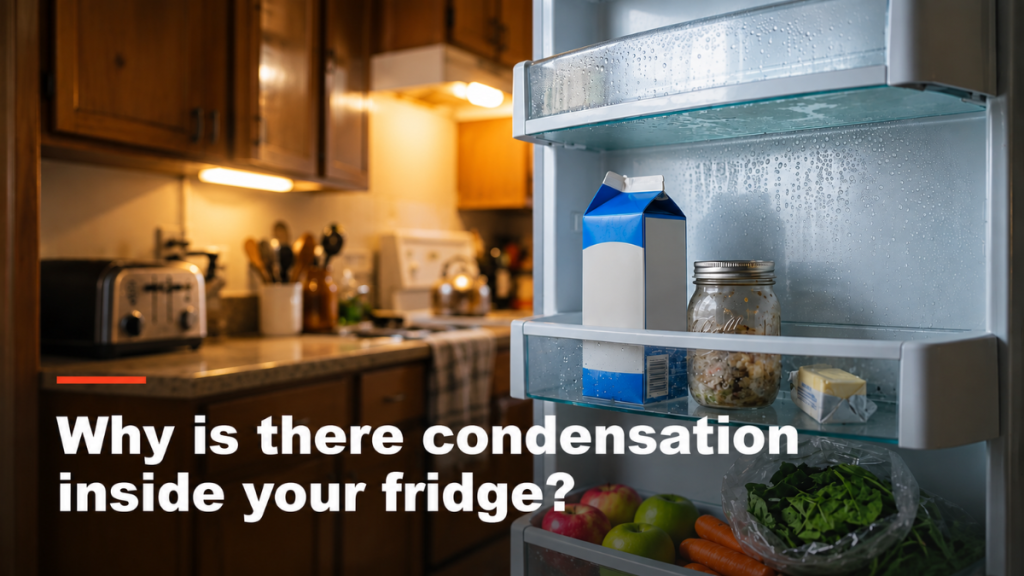
Finding moisture or beads of water inside your fridge can be concerning. Many homeowners wonder whether condensation inside a refrigerator is normal physics or a sign that you need to book a Halifax fridge repair visit.
Light moisture after opening the door is often normal, but persistent puddles indicate an underlying issue. Understanding what causes condensation inside a refrigerator helps you determine whether it is an easy fix or a problem that requires a technician.
Why Condensation Forms Inside a Refrigerator
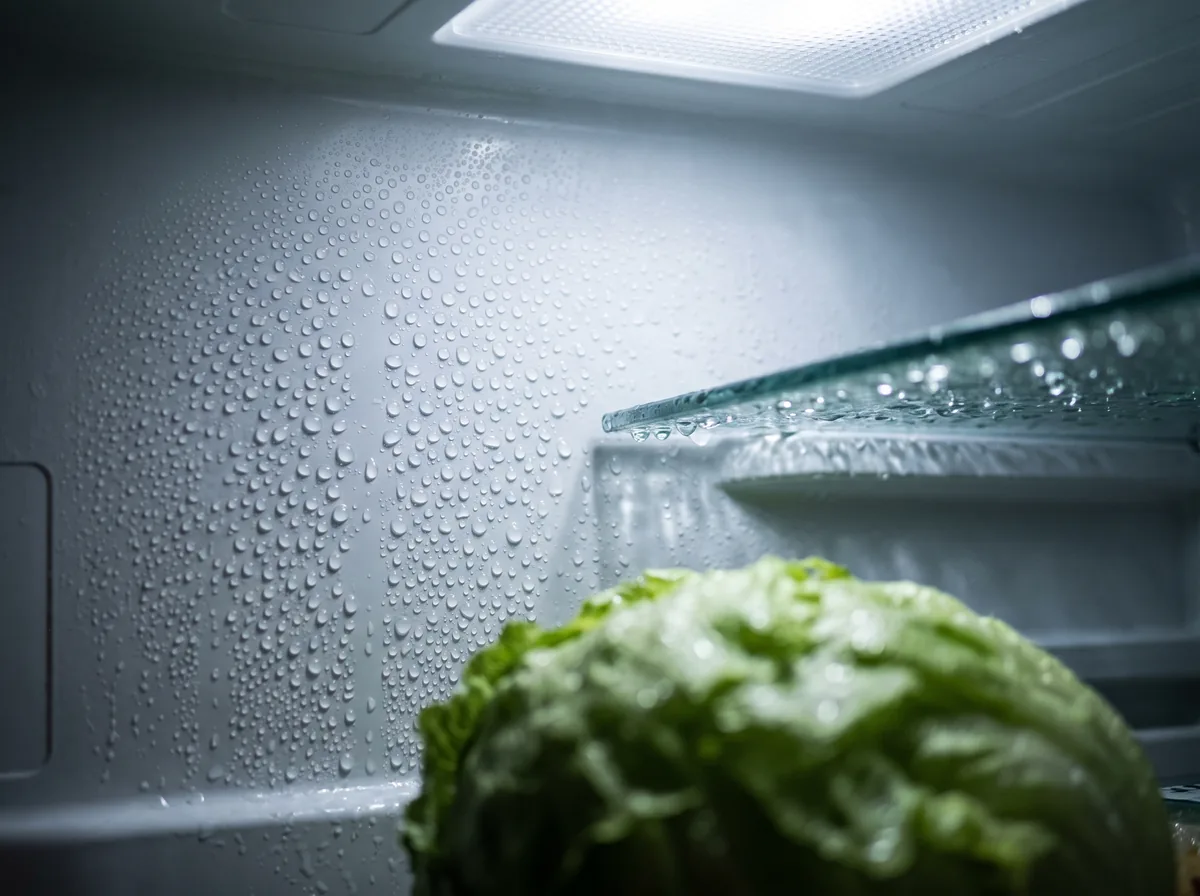
Every time the door opens, warm, humid air enters and meets the cold interior surfaces. Because cold air cannot hold as much moisture as warm air, water droplets settle on the coldest available surfaces, such as the back wall, glass shelves, or door lining.
Occasional condensation inside a refrigerator is a natural response to temperature differences. However, continuous moisture buildup indicates that warm air is entering constantly or that internal moisture cannot drain properly.
The Most Common Causes of Refrigerator Condensation
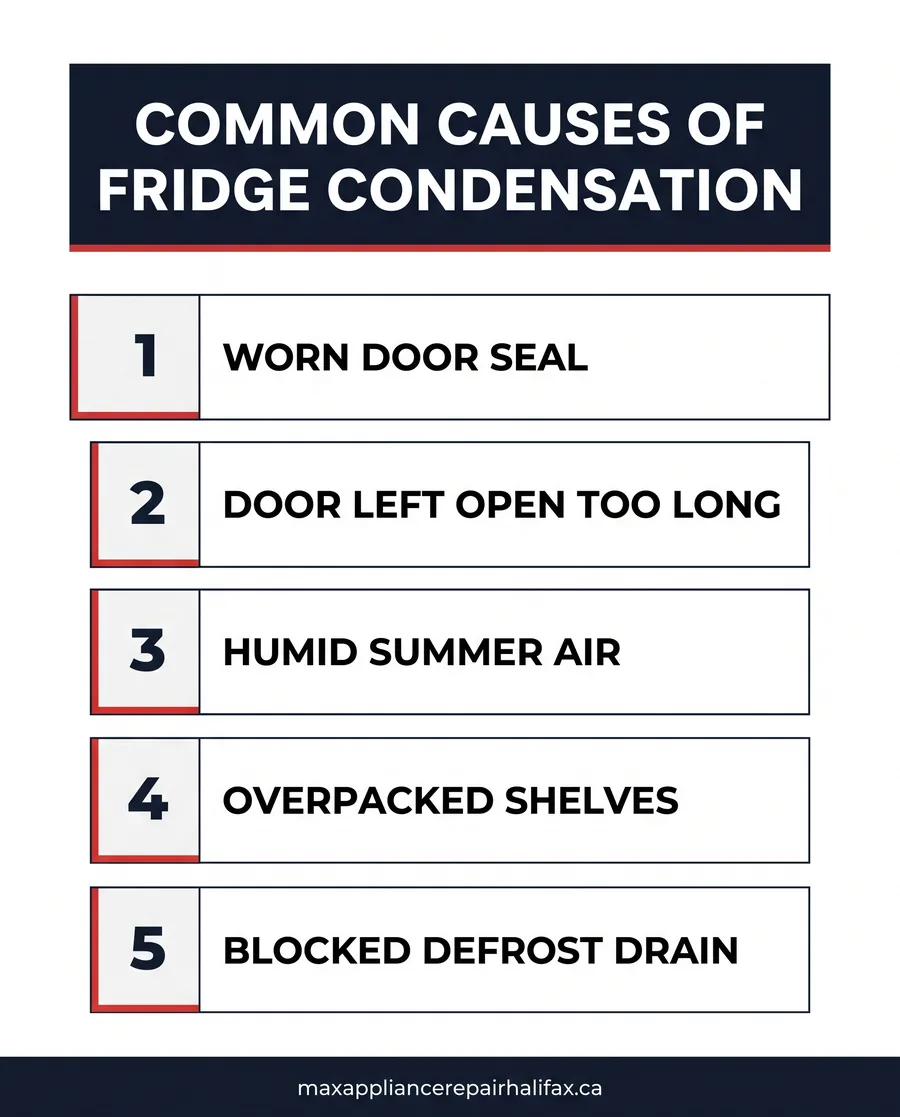
Most cases of excess moisture stem from a few specific issues that disrupt air circulation or temperature seal:
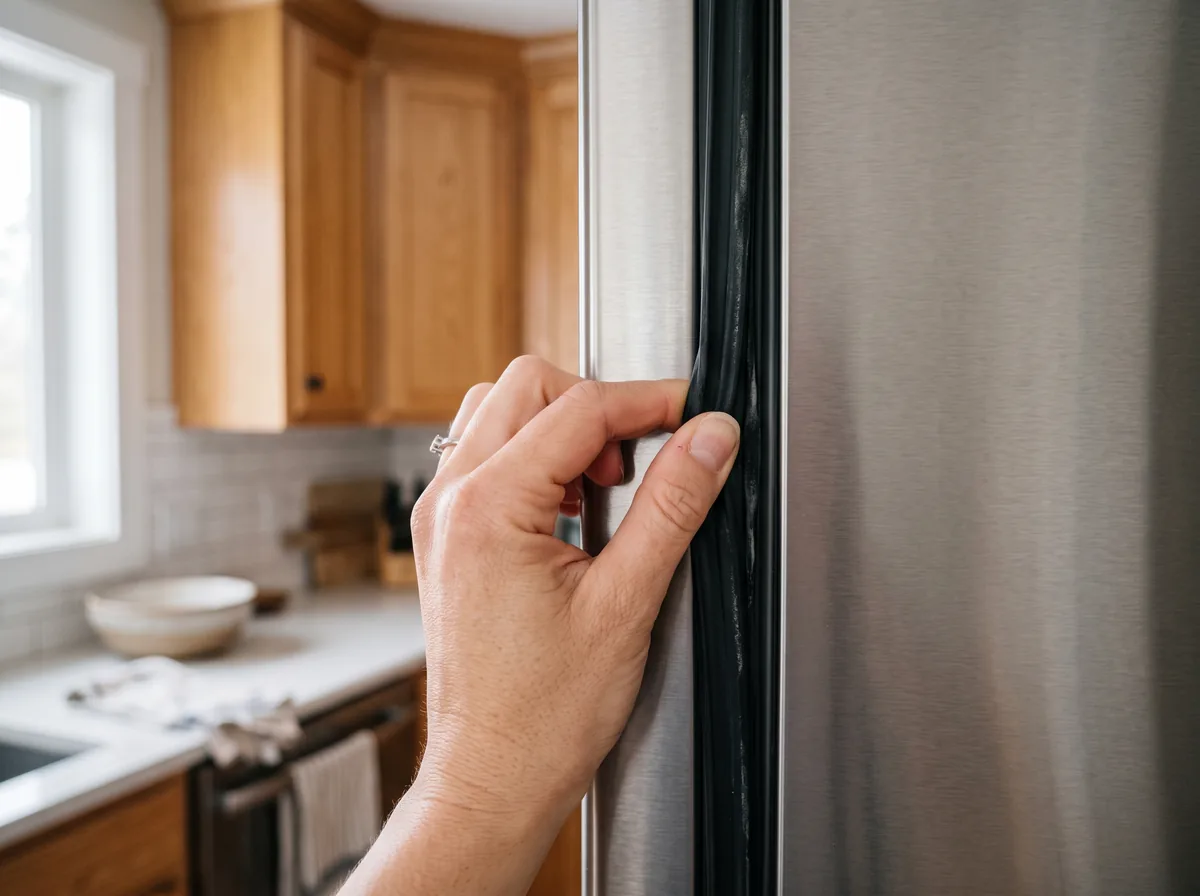
- Worn door gaskets: A damaged or loose seal allows warm room air to leak inside continuously.
- Frequent or prolonged door openings: Leaving the door open too long lets excess moisture accumulate.
- High room humidity: Hot, humid weather increases the amount of moisture entering the unit.
- Blocked airflow: Overcrowded shelves prevent air from circulating evenly.
- Clogged defrost drain: A blocked drain tube sends melted frost back into the cabinet instead of out to the drain pan.
- Hot food storage: Placing warm leftovers inside introduces steam and humidity.
Pro Tip
Close the door on a piece of paper. If it slides out easily without resistance, your gasket seal is failing and letting humid air inside.
Normal Condensation Versus a Warning Sign
A thin film of moisture after opening the door on a humid day is normal and should evaporate quickly once the door remains closed. However, standing water under crisper drawers, persistent droplets, or frost buildup along the back wall indicates an issue that needs attention.
Red Flag
Unresolved condensation inside refrigerator compartments creates ideal conditions for mould and mildew growth, especially along seals and drawer tracks. Promptly address recurring water pooling to avoid food contamination.
How to Reduce Condensation Yourself
You can prevent or eliminate mild moisture buildup with these routine checks:
- Test the door gasket with paper along the entire seal frame.
- Avoid overpacking shelves so air can circulate freely.
- Divide leftovers into shallow containers and refrigerate promptly once steaming stops, always within two hours.
- Ensure the refrigerator is level so doors close completely on their own.
- Inspect and clean the defrost drain hole at the rear of the cabinet.
Proper seals and maintenance prevent excess moisture while saving energy. According to ENERGY STAR Canada’s efficiency guidance, maintaining tight door gaskets keeps refrigerators running at peak efficiency. For food safety when handling leftovers, follow Health Canada’s food safety guidance on leftovers.
When to Call a Professional
If basic troubleshooting does not resolve the issue, key components like the defrost thermostat, door seals, or drain system may need replacement. Our team services major brands covered under our appliance brands we service, as well as units experiencing moisture issues on the freezer side.
Download the Free Quick Guide
A printable troubleshooting checklist for identifying and fixing refrigerator moisture issues.
Frequently Asked Questions
If you are experiencing excessive moisture, follow these quick steps:
- Perform the paper test along the door seals.
- Clear the defrost drain and organize shelves for optimal airflow.
- Monitor whether moisture returns over the next 48 hours.
- If moisture persists, contact a repair technician to prevent internal damage.
If basic steps do not clear up the issue, our local repair technicians in Bedford and across Dartmouth can quickly diagnose and fix the root cause. Book a Halifax appliance repair visit today to keep your refrigerator running efficiently.