

Last updated: August 4, 2026
You open the fridge on a muggy Halifax afternoon and the shelves feel damp, the door seal sweats, and the whole unit seems to run without stopping. That is not your imagination. Understanding how humidity affects refrigerators explains why summer is the hardest season on your kitchen appliances, and a few small changes, or a timely fridge repair in Halifax, can save you a bigger bill later.
Coastal air near the harbour carries a lot of moisture. When that warm, wet air meets the cold surfaces of your fridge and freezer, it condenses, freezes, and forces the compressor to work overtime. Here is what actually happens inside, and what to do about it.
In this article
Why summer is hard on your fridge
A refrigerator works by moving heat from inside the box to the air in your kitchen. The bigger the gap between the cold interior and the warm room, the harder it has to work. A hot, humid Halifax kitchen widens that gap in two ways at once: the air is warmer, and it is heavy with moisture that wants to condense on every cold surface it touches.
So the appliance faces a double load in July and August. It fights a warmer room, and it deals with a constant supply of moisture sneaking in every time the door opens. That is why the same fridge that hummed along quietly in February seems to struggle in the summer. The machine has not changed. Its environment has. Understanding how humidity affects refrigerators during these peaks can help you prevent performance drops before they start.
Did you know
Warm air holds far more water vapour than cold air. Air at 30 degrees Celsius can carry several times the moisture of air at 5 degrees. Every time warm Halifax air enters your fridge, it dumps that extra moisture onto the cold shelves and walls, which is why sweating and frost spike in humid weather.
Condensation, sweating, and where it comes from
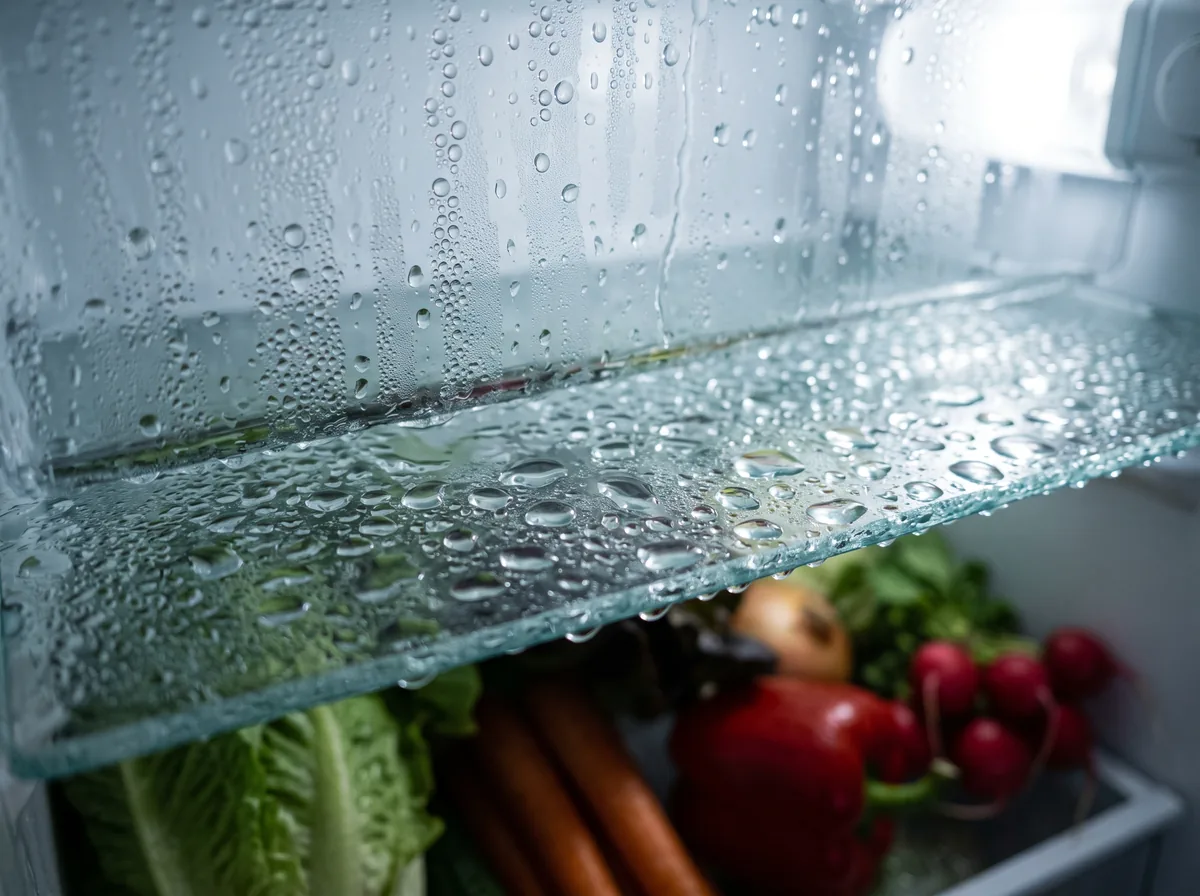
Condensation is the headline symptom of how humidity affects refrigerators. You see it as water droplets on the interior walls, a damp film on the shelves, puddles under the crisper drawers, or beads of water on the outside of the door and the rubber gasket. All of it is the same physics: warm, moist air hitting a surface below its dew point and giving up its water as liquid.
Most summer condensation is normal and manageable. It turns into a problem when the door does not seal well, when the unit is set colder than it needs to be, or when warm dishes and uncovered liquids add even more moisture to the mix. Exterior sweating on the door frame usually points to high room humidity plus a tired gasket rather than a broken fridge.
People often ask: why is the outside of my fridge sweating?
Exterior sweating happens when humid room air condenses on the cooler outer surface of the door and frame, most often in a hot, damp kitchen. It usually means the room humidity is high and the door gasket is letting cold escape at the edges. Improving kitchen ventilation and replacing a worn gasket typically clears it. Persistent heavy sweating is worth having checked.
Why your fridge runs longer in humid weather
The compressor is the heart of the fridge, and humidity makes it run longer for two reasons. First, all that condensing moisture releases heat as it changes from vapour to liquid to frost, and the fridge has to remove that heat. Second, frost that builds on the evaporator coils acts like a blanket, so the system has to run harder and longer to pull the same amount of heat out of the box.
Longer run times mean more electricity and more wear. If your summer power bill jumps and the fridge feels like it never quite shuts off, knowing how humidity affects refrigerators can help you spot when your system is working too hard. Keeping the coils clear and the door sealing tightly helps the unit run efficiently. For efficiency guidance on fridges and freezers, the ENERGY STAR Canada program from Natural Resources Canada is a good reference.
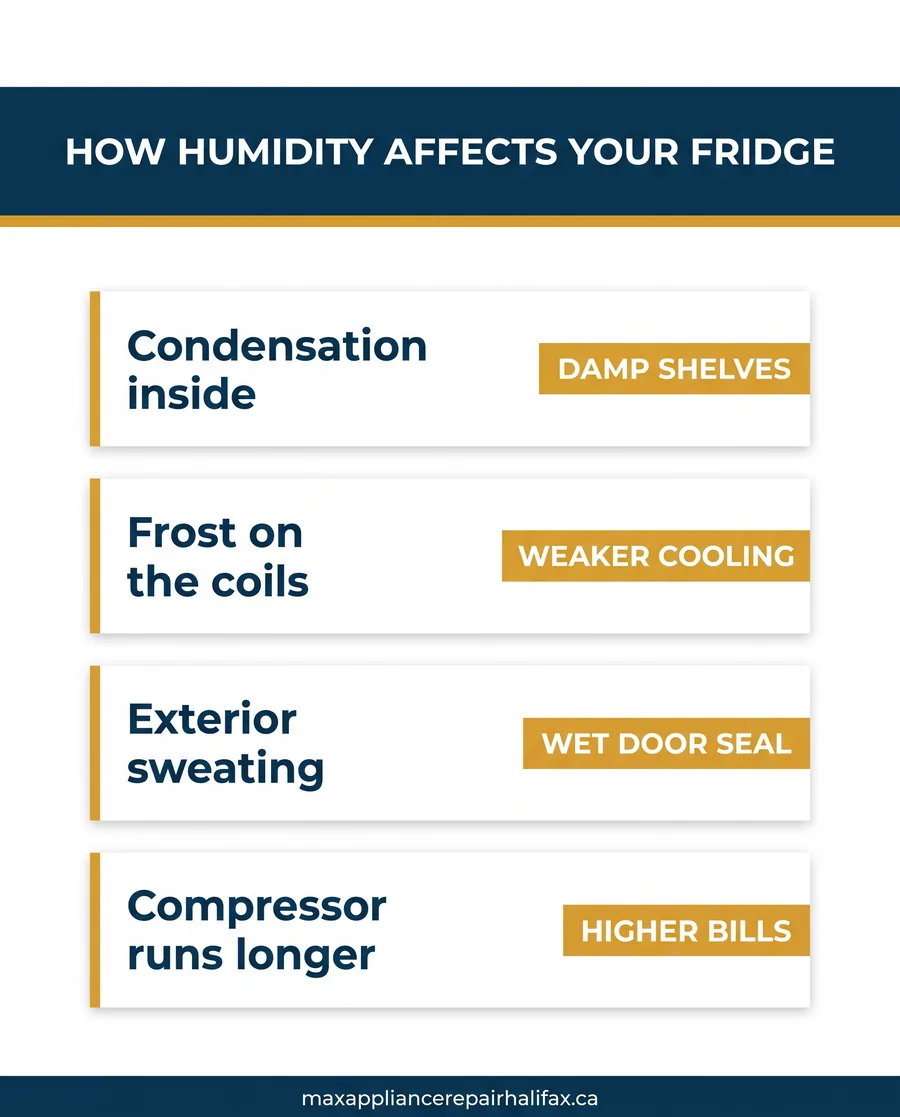
| Humidity effect | What you notice | What it costs you |
|---|---|---|
| Condensation inside | Damp shelves, water under drawers | Faster food spoilage, mold risk |
| Frost on coils | Ice at the back wall, weak cooling | Longer run times, higher bills |
| Exterior sweating | Wet door frame and gasket | Gasket wear, drips on the floor |
| Compressor overload | Fridge rarely shuts off | More wear, shorter lifespan |
Moisture, mold, and musty smells
Where there is trapped moisture, mold and odours follow. Damp corners, wet door gaskets, and standing water under the crisper are exactly where mildew likes to grow. A musty smell when you open the door, or dark specks along the gasket folds, is a sign that humidity has been sitting somewhere it should not.
The fix is mostly about drying and airflow. Wipe up standing water, clean the gasket folds, and do not overpack the shelves so air can move. Uncovered food both releases moisture and absorbs smells, so seal leftovers. If the smell keeps returning after a good clean, the drain or drip pan may be holding stagnant water and is worth a closer look.
What Halifax homeowners can do about it
- Check the door seal. Run the dollar-bill test around the door and replace the gasket if it no longer grips.
- Cool and cover food. Let hot dishes cool on the counter first, and seal liquids so they do not steam up the interior.
- Open the door with purpose. Decide what you want before opening, and close it promptly on humid days.
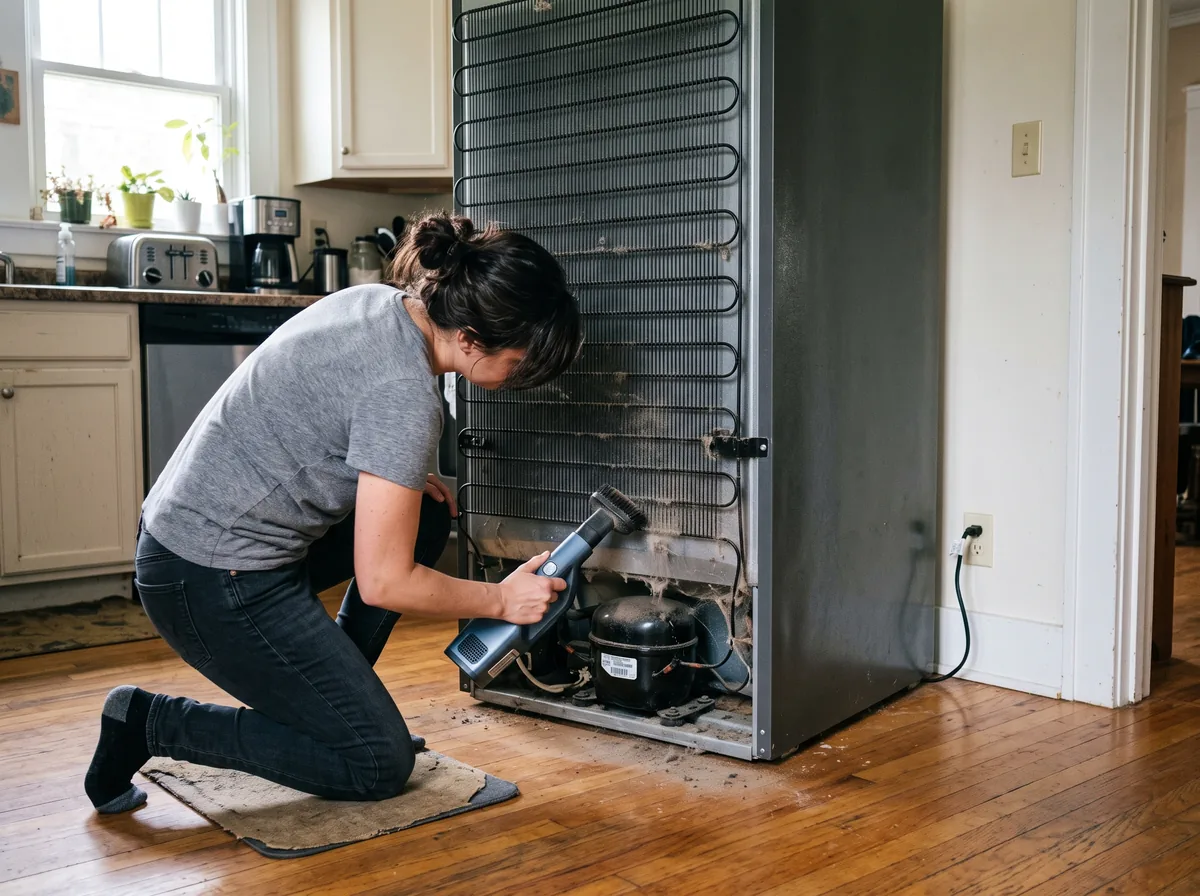
- Clean the condenser coils. With the fridge unplugged, vacuum the coils at the back or underneath a couple of times a year.
- Give it breathing room. Leave a gap behind and beside the fridge, and keep it away from the oven and direct sunlight.
- Set a sensible temperature. Aim for 3 to 4 degrees Celsius in the fridge and minus 18 in the freezer. Colder is not better.
- Run kitchen ventilation. An exhaust fan or a nearby dehumidifier lowers room humidity so less moisture reaches the fridge.
Download the free quick guide
A one-page checklist to keep your fridge and freezer running well through humid Halifax summers.
Signs it is more than the weather
While understanding how humidity affects refrigerators explains a lot of damp shelves and longer run times, it does not explain everything. Book a technician when cooling clearly fails, when you see heavy frost that returns within days of a defrost, when water pools no matter how often you wipe it up, or when the compressor runs constantly and the box still feels warm. As Halifax’s most trusted and highest reviewed appliance repair company, with customer feedback available on Google, we find the real cause rather than blaming the weather.
Frequently Asked Questions
If your fridge or freezer is struggling to keep up with Halifax humidity this summer, do not wait for it to quit. Max Appliance Repair Halifax services fridges and freezers across Tantallon and Timberlea, Dartmouth, and Bedford. Book a cooling check and we will get ahead of the heat.
Need a hand with this? Max Appliance Repair Halifax offers fridge repair appointments in Halifax. Same-day times are often available, depending on scheduling, travel, and parts availability. The service-call fee is waived when the recommended repair is completed. Call (902) 904-5559.