
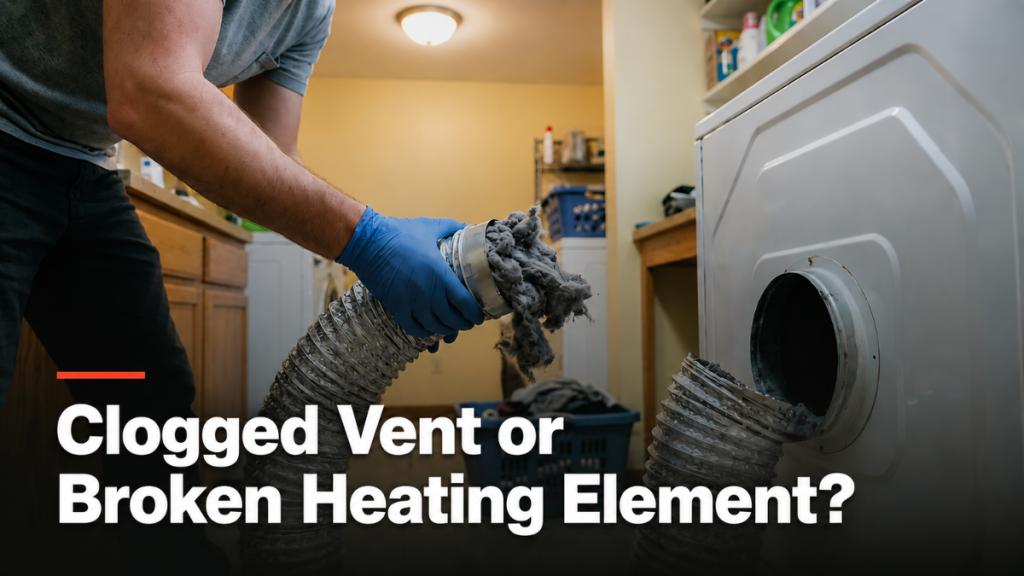
If your clothes take multiple cycles to dry or come out cold, you are likely dealing with a clogged dryer vent vs. broken heating element issue. These two common problems create similar symptoms in your laundry room, but they require very different solutions.
Understanding the difference between a clogged dryer vent vs broken heating element is essential for your home’s safety and appliance efficiency. A blocked vent poses a serious fire hazard, while a burned-out heating element leaves you without warm air. Knowing how to tell them apart helps you take the right corrective steps quickly.
Clogged Vent vs. Broken Element: Quick Answer
A clogged vent still generates heat, but restricted airflow prevents moisture from escaping, leaving clothes hot, damp, and slow to dry. In contrast, a broken heating element results in a drum that tumbles normally without producing any warmth at all. Evaluating airflow and drum temperature is the fastest way to narrow down the issue.
Signs Your Dryer Vent Is Clogged
When lint blocks your exhaust duct, hot air backs up inside the machine. Symptoms typically build gradually over time:
- Clothes remain damp after a full cycle, especially heavy fabrics like towels.
- The dryer cabinet feels abnormally hot to the touch during operation.
- A burning-dust or hot lint odor is present while the machine runs.
- The laundry room feels excessively warm or humid.
- The exterior vent hood flap fails to open or barely moves when the dryer runs.
Signs the Heating Element Has Failed
A failed heating element stops heat generation entirely while airflow remains unrestricted. You will usually notice:
- Clothes come out completely cold at the end of a full cycle.
- The exterior dryer cabinet remains cool throughout operation.
- The circuit breaker trips repeatedly when the dryer enters a heat cycle.
- A sharp, metallic burning smell occurs instead of a dusty lint odor.
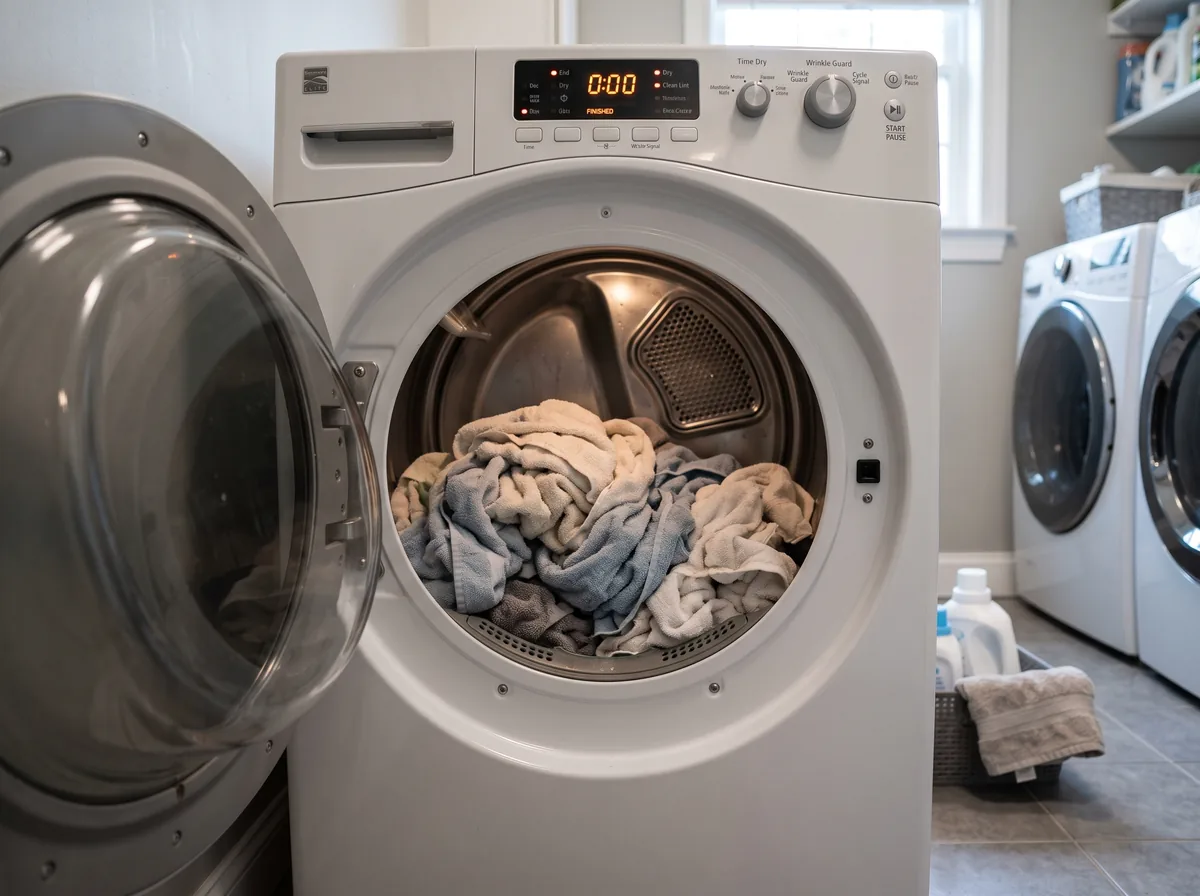
Pro Tip
Check your circuit breaker before assuming the heating element is broken. Electric dryers use a double-pole breaker; if one pole trips, the drum will spin without generating heat.
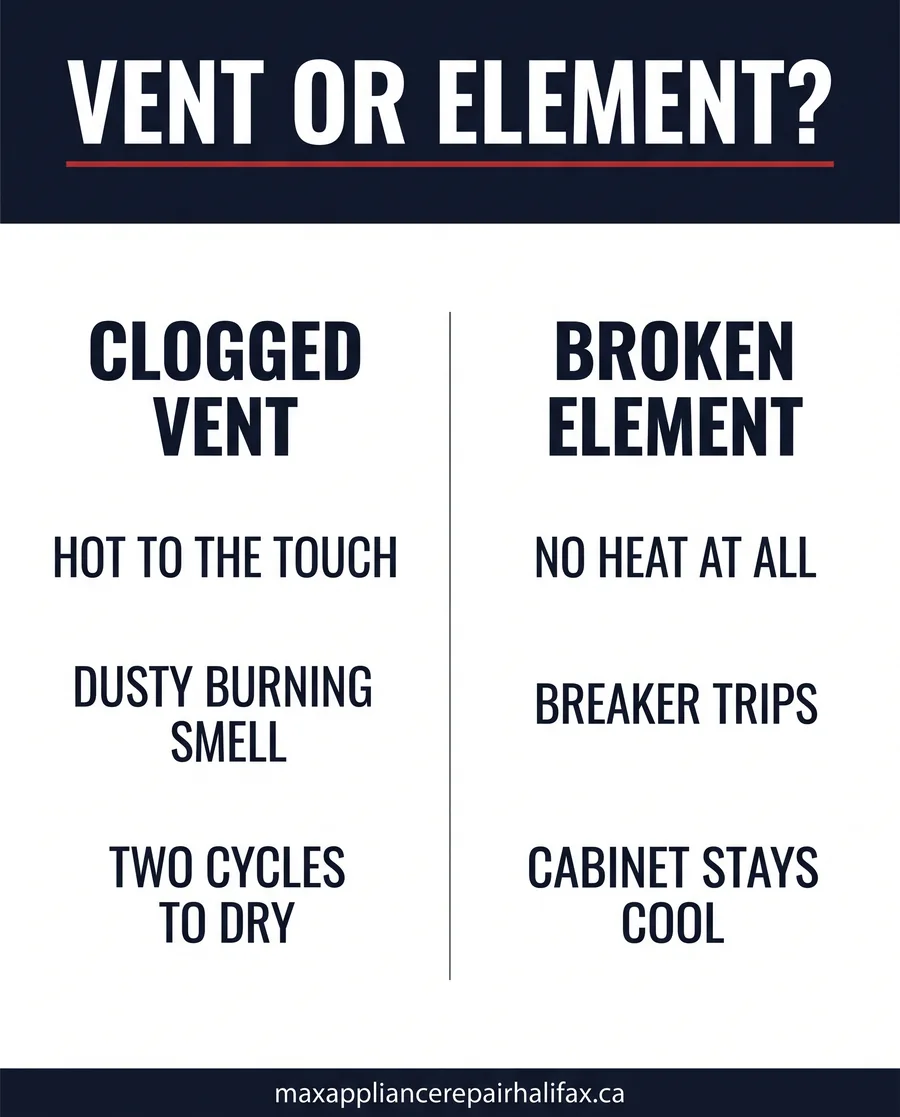
Symptom Comparison: Clogged Vent vs. Broken Element
Use this reference table when diagnosing a clogged dryer vent vs broken heating element before scheduling a service visit.
| Symptom | Points to a Clogged Vent | Points to a Broken Heating Element |
|---|---|---|
| Clothes damp after full cycle | Very common (trapped moisture) | Only if partial heat remains |
| Cabinet hot to the touch | Common (heat backed up inside) | Uncommon (cabinet stays cool) |
| No heat generated at all | Rare | Very common |
| Burning smell during cycle | Dusty or warm lint odor | Sharp metallic burning odor |
| Exterior vent flap does not lift | Strong indicator of blockage | No effect on flap movement |
Safety Warning
A dryer cabinet that feels hot to the touch paired with a burning odor is a serious hazard. Immediately turn off and unplug the unit. According to the National Fire Protection Association (NFPA), lint buildup and restricted vents are primary causes of dryer fires.
Why This Difference Matters
Beyond safety considerations, a clogged duct causes your dryer to run longer, increasing energy bills and placing excessive thermal strain on internal parts. Over time, unresolved airflow restrictions can cause thermal fuses or heating elements to burn out prematurely.
A broken heating element renders your dryer incapable of drying clothes. Homeowners seeking local appliance repair in the Sackville area should prioritize routine vent cleaning to prevent repeat component failures.

Download the Free Diagnostic Guide
Get a printable checklist covering symptoms, safety measures, and preliminary steps before calling a technician.
Frequently Asked Questions
Can a clogged dryer vent really cause a fire?
Yes. Accumulated lint in a blocked vent restricts airflow, trapping high heat inside the ductwork. This buildup is a primary cause of residential dryer fires according to fire safety organizations.
Is it safe to use a dryer that feels hot on the outside?
No. Excess cabinet heat indicates restricted airflow. Pause operation, disconnect power, and inspect the vent duct and outdoor flap for blockages before resuming use.
How often should a dryer vent be cleaned?
Dryer vents should be inspected and cleaned at least once per year. Households with pets, large families, or long duct runs may require cleaning every 6 months.
Can a clogged dryer vent damage the heating element?
Yes. Airflow obstruction forces the heating element and thermal fuse to operate under higher temperatures for longer periods, leading to premature failure.
Can I check these issues myself or do I need a technician?
You can safely check the lint filter, external vent flap, and cabinet surface temperature yourself. Electrical testing of the heating element or thermal fuse requires multimeters and partial disassembly, which should be performed by a professional.
What to Do Next
Determining whether you have a clogged dryer vent vs broken heating element dictates your next step:
- If symptoms point to a clogged vent: Stop running back-to-back cycles, inspect your exterior vent flap, and clean your exhaust vent line.
- If symptoms point to a broken heating element: Verify your home breaker panel first, then arrange for component replacement.
- If the diagnosis remains unclear: Contact a local Halifax dryer repair service to inspect both airflow and heating components on-site.
Max Appliance Repair Halifax offers trusted service backed by over 1,200 verified Google reviews across the Halifax area. If your dryer is not drying efficiently, book a Halifax appliance repair visit for expert diagnostic and repair services.