Last updated: August 4, 2026
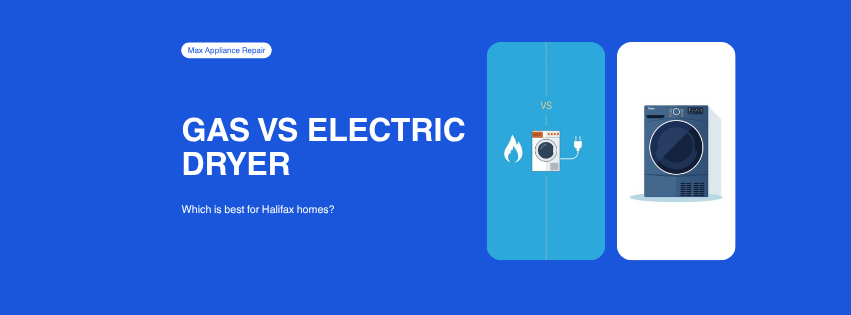
If you are buying a new dryer or replacing a broken one, you have probably seen both gas and electric models on the shelf. In some parts of Canada, gas dryers are common. But in Halifax and most of Nova Scotia, the picture is different and the right choice depends more on your home’s setup than on personal preference.
The Quick Answer for Halifax
Most Halifax homes use electric dryers and for good reason. Natural gas infrastructure in Nova Scotia is more limited than in provinces like Ontario or Alberta. Many Halifax homes, especially older ones, simply do not have a gas hookup in the laundry area. If you do not already have gas plumbing near your dryer, electric is the practical choice. That said, if your home does have gas available (some newer developments and converted homes do), a gas dryer is worth considering.
Running Cost Comparison
| Dryer Type | Cost Per Load | Annual Cost (5 loads/wk) |
|---|---|---|
| Electric (standard) | $0.45 to $0.75 | $120 to $195 |
| Gas | $0.25 to $0.45 | $65 to $120 |
| Heat pump electric | $0.20 to $0.40 | $55 to $105 |
Based on Nova Scotia Power’s rate of approximately 18.2 cents per kWh. Gas costs estimated at current NS natural gas rates.
Upfront Cost Comparison
- Electric dryer: $500 to $1,200 depending on brand and features
- Gas dryer: $550 to $1,300 – typically $50 to $100 more than the equivalent electric model
- Gas installation (no existing hookup): $500 to $2,000+ for gas line extension, venting, and permits
If you already have a gas hookup, the payback period for a gas dryer is roughly 1 to 2 years. If you need to install a gas line from scratch, it could take 5 to 10 years or more to recoup the installation cost through energy savings alone.
Drying Performance
Gas dryers heat up faster and generally dry clothes slightly quicker than electric models. The heat is also more moist (a byproduct of gas combustion), which some people say results in softer fabrics and fewer wrinkles. Modern electric dryers with heat pump technology are narrowing this gap significantly, heat pump dryers use 40 to 50% less electricity than conventional electric models, though they take longer per cycle and cost more upfront ($900 to $1,500).
Safety Considerations
Gas dryers produce combustion byproducts including carbon monoxide and require proper ventilation. A gas leak or faulty connection is a serious safety hazard – annual inspection is recommended. Electric dryers do not produce combustion gases, but lint fires remain a risk for both types if the vent is clogged. Dryer vent maintenance is critical regardless of fuel type.
Repair and Maintenance
Electric dryers are generally simpler to repair because they have fewer components – no gas valve, no igniter, no burner assembly. Parts are also more widely available in Nova Scotia since electric dryers dominate the market here. Gas dryer repairs require a technician comfortable working with gas connections, and not all repair companies service gas appliances in HRM. Typical repair costs for both types fall in the $125 to $325 range for common issues like heating elements, thermal fuses, and belt replacements.
What About Ventless and Heat Pump Dryers?
A third option worth considering: ventless heat pump dryers. These are fully electric, do not need an exhaust vent, and use significantly less energy. They are ideal for Halifax condos and apartments where exterior venting is not possible. The trade-off: they cost more upfront, take longer to dry, and can be more expensive to repair. Brands like Bosch, Miele, and LG offer popular heat pump models.
The Bottom Line for Halifax
- No existing gas hookup? Go electric. The installation cost for gas does not justify the annual savings.
- Already have gas in your laundry area? A gas dryer will save you $50 to $80 per year and dry slightly faster.
- In a condo with no exterior vent? A ventless heat pump dryer is your best option.
- Want the lowest long-term energy cost? A heat pump electric dryer wins, despite the higher upfront price.
Dryer Not Heating or Taking Too Long? We Fix All Types.
Gas, electric, or heat pump – repair appointments are available across Halifax, Dartmouth, Bedford, and HRM.
Book a Technicianor call (902) 904-5559




Frequently Asked Questions
Are gas dryers available in Halifax?
How much does it cost to run an electric dryer in Nova Scotia?
Can I convert my electric dryer to gas?
What is a heat pump dryer and is it worth it in Halifax?
How do I know if my dryer vent needs cleaning?
Related Posts
What Halifax condo owners need to know about stacking kits
What standby power costs you on your NS Power bill