
Last updated: August 4, 2026
Your microwave is off. Your dishwasher finished hours ago. Your dryer is sitting idle. But they are all still using electricity. It is called phantom power also known as standby power, vampire power, or phantom load and it accounts for roughly 5 to 10% of the average Canadian household’s electricity bill. In Nova Scotia, where residential rates sit around 18.2 cents per kWh, that is real money draining from your wallet every month.
What Is Phantom Power?
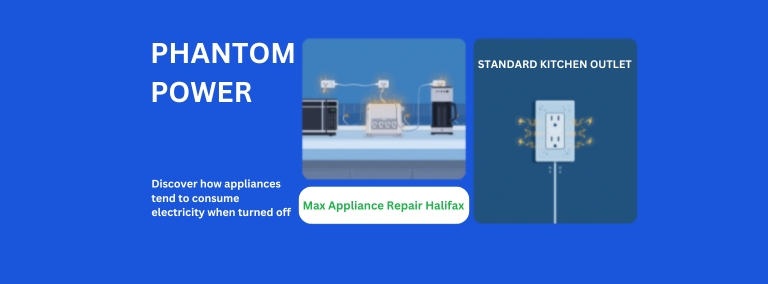
Phantom power is the electricity an appliance draws while it is plugged in but not actively in use. Any device with a standby light, clock display, remote control receiver, or Wi-Fi connection is pulling power around the clock even when you think it is off. This is not a design flaw. These devices need a small amount of power to maintain memory, respond to remote signals, or keep a clock running. But across a whole household of appliances, it adds up fast.
Which Appliances Are the Worst Offenders?
| Appliance | Standby Draw | Annual Cost (NS) |
|---|---|---|
| Cable / satellite box | 15 to 30W | $24 to $48 |
| Game console (instant-on) | 10 to 25W | $16 to $40 |
| Desktop computer + monitor | 5 to 15W | $8 to $24 |
| Smart TV | 5 to 15W | $8 to $24 |
| Microwave (clock display) | 2 to 5W | $3 to $8 |
| Dishwasher (control board) | 1 to 4W | $2 to $6 |
| Washer / dryer (smart models) | 1 to 5W each | $2 to $8 each |
What Does Phantom Power Actually Cost in Nova Scotia?
For a typical Halifax home with roughly 40 to 50 watts of phantom draw running around the clock very common with a TV, cable box, microwave, coffee maker, washer, and a couple of chargers – here is the math:
45W x 24 hours x 365 days = 394 kWh per year
394 kWh x $0.182 = approximately $72 per year
That is $72 per year for electricity you are not using. Not catastrophic, but not nothing either especially as Nova Scotia Power rates continue to climb.
How to Reduce Phantom Power at Home
- Use power bars with switches – plug your entertainment centre or computer setup into a switched power bar and flip it off when not in use
- Unplug chargers when not charging – phone, laptop, and tablet chargers all draw small amounts even when nothing is attached
- Use smart power strips – these automatically cut power to peripheral devices when the main device (like a TV) is turned off
- Disable instant-on features – game consoles and smart TVs have options to fully shut down instead of entering standby; a few extra seconds of boot time in exchange for lower electricity use
- Do not worry about the fridge – your fridge needs to stay plugged in; same for your router and modem; focus energy on discretionary entertainment devices
Should You Unplug Kitchen Appliances?
For most people, unplugging and replugging the dishwasher, washer, and dryer every day is not practical and the savings are small, a few dollars per year per appliance. The bigger wins come from entertainment devices and phone chargers left plugged in indefinitely.
However, if you are going on vacation for a week or more, unplugging non-essential appliances is a smart move. It also protects them from power surges during Nova Scotia storms- a surge through a plugged-in appliance can damage control boards and cost hundreds in repairs. If you suspect any surge-related damage or performance issues, it’s best to schedule a professional appliance repair service to prevent further problems and costly breakdowns.
Phantom Power and Modern Smart Appliances
Smart appliances, Wi-Fi connected fridges, washers with app control, smart ovens draw more standby power than their non-smart counterparts because they need to maintain a Wi-Fi connection and listen for commands. A Samsung smart fridge or LG ThinQ washer may draw 5 to 10W in standby compared to 1 to 2W for a basic model. That is an extra $8 to $16 per year per appliance. The convenience may well be worth it, but it is worth knowing.
Appliance Drawing Too Much Power? We Can Help.
If an appliance feels warm at rest, buzzes while idle, or your bill has jumped unexpectedly, it may have an electrical fault. Diagnostic appointments are available across Halifax, Dartmouth, and HRM. Same-day times are often available, depending on scheduling, travel, and parts availability.
Book a Diagnosticor call (902) 904-5559




Frequently Asked Questions
What is phantom power and why does it matter?
Which household appliances use the most phantom power?
How much does phantom power cost per year in Nova Scotia?
Does unplugging appliances when not in use actually save money?
Can phantom power damage an appliance or cause a fire?
Related Posts
Annual electricity costs by fridge age at Nova Scotia rates
What to expect to pay for common repairs in Nova Scotia
Think an appliance is failing, not just drawing standby power? Book appliance repair in Halifax or browse the brands we fix.