
That first espresso of the morning used to pour thick and sweet. Lately, it tastes flat, bitter, and the crema has gone thin and pale. Nine times out of ten, mineral and oil buildup inside the unit is to blame. Consistent built-in coffee machine maintenance is the quiet difference between a rich espresso shot you look forward to and a bitter cup you tolerate, and it is far cheaper than a built-in coffee machine repair in Halifax.
A built-in espresso machine hides its wear better than a countertop unit. You do not see mineral scale creeping through the boiler or coffee oils going rancid in the group head; you simply taste the degraded result. This guide covers the simple routine that keeps your unit pulling proper shots, how hard water affects extraction, and when to call a technician.
In this article
Why built-in coffee machine maintenance matters for better espresso
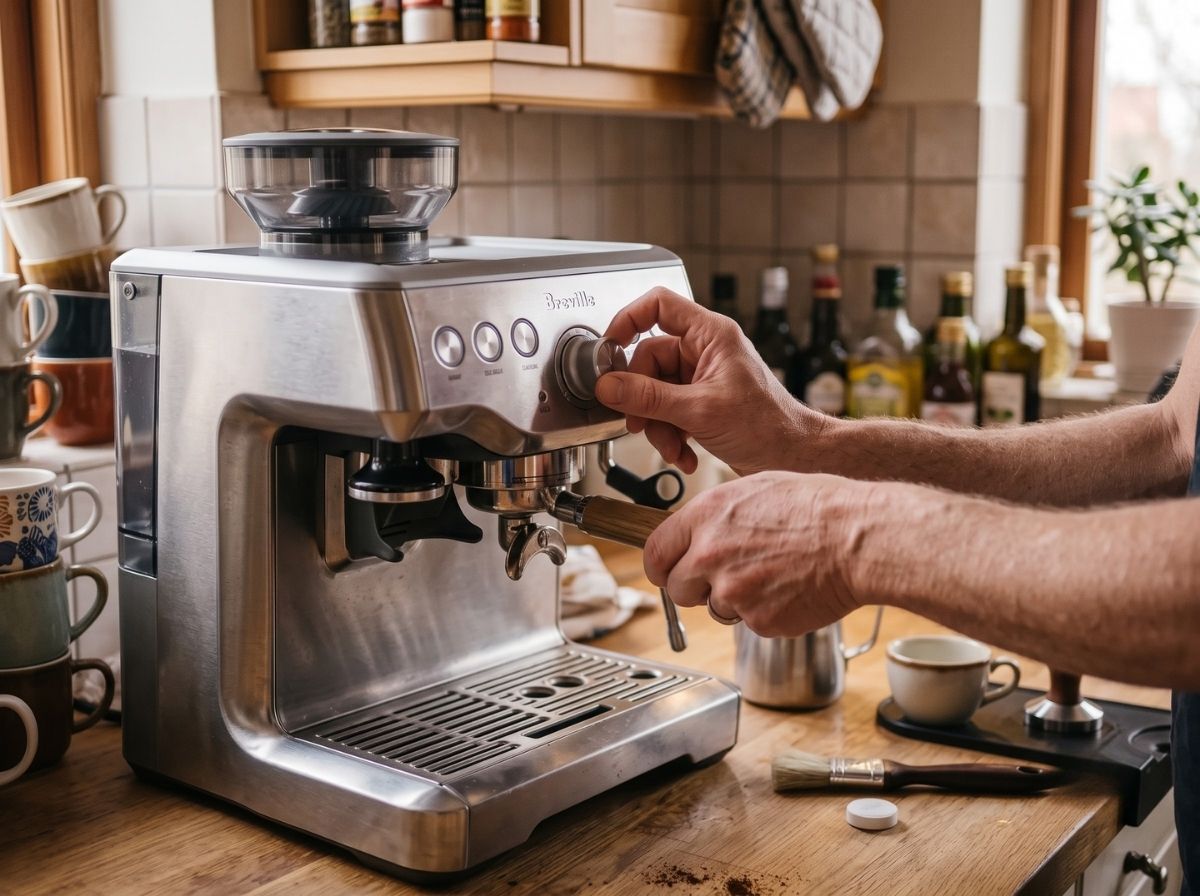
Espresso brews under high pressure through finely ground coffee, making it sensitive to small changes inside the machine. Over time, old coffee oils build up in the brew group and portafilter, turning rancid and adding a harsh, bitter flavor. Simultaneously, mineral scale from your water restricts internal water lines and disrupts brewing temperatures.
Because this buildup occurs gradually, shot quality degrades almost imperceptibly. Routine cleaning and descaling reset the internal components and protect critical parts, like the pump, boiler, and brew unit, from premature wear.
The maintenance schedule that keeps espresso tasting fresh
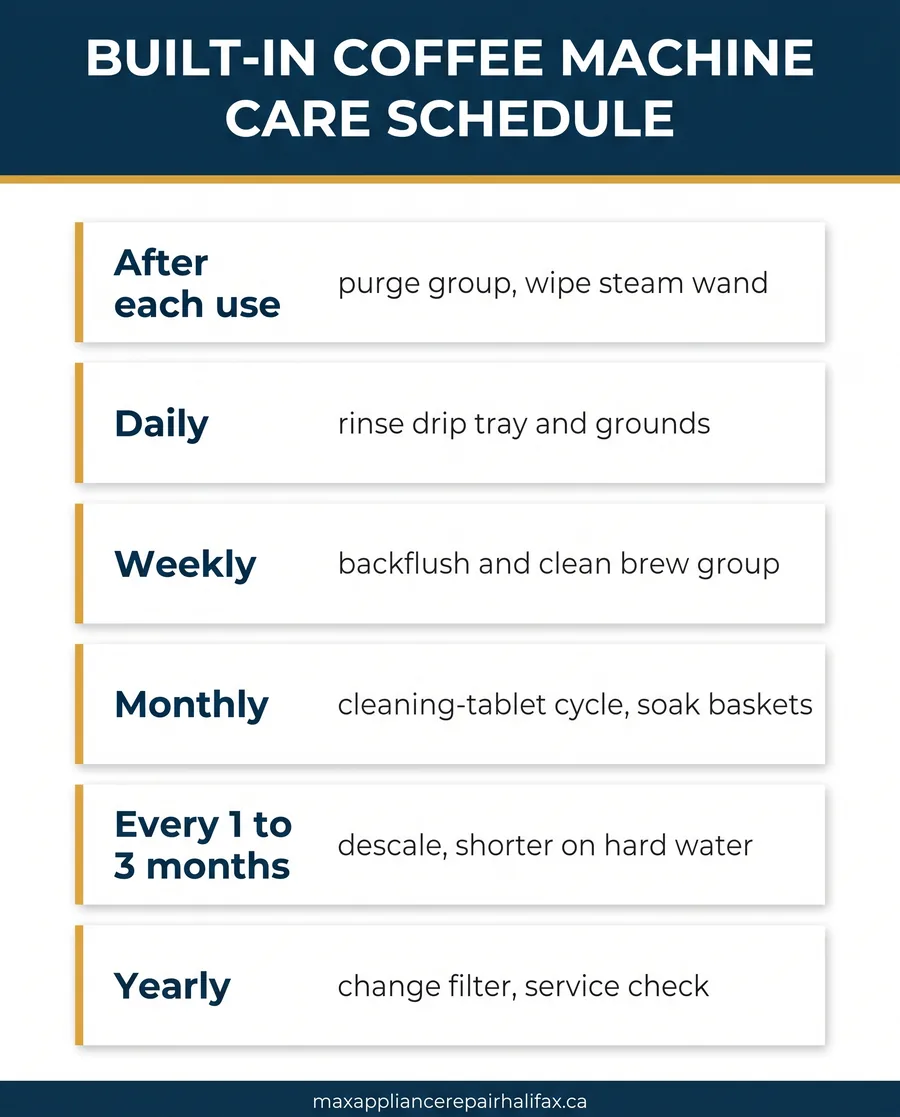
Effective built-in coffee machine maintenance relies on performing the right task at the proper interval rather than daily overhauls. Follow this structured care schedule, and always consult your manufacturer manual for model-specific requirements.
| How often | What to do | Why it matters |
|---|---|---|
| After each use | Purge the group head and wipe the steam wand | Clears coffee grounds and milk residue before they harden |
| Daily | Empty and rinse the drip tray and grounds container | Prevents mold and odors inside the cabinet space |
| Weekly | Backflush with water and clean the brew screen | Removes accumulated oils that cause bitter flavors |
| Monthly | Run a cleaning tablet cycle and soak filter baskets | Dissolves stubborn oil deposits missed during weekly flushes |
| Every 1 to 3 months | Descale using an approved descaling solution | Removes internal mineral deposits from boilers and lines |
| Yearly | Replace water filter and inspect internal seals | Protects internal plumbing and maintains temperature accuracy |
How Halifax hard water and scale ruin your shots
A critical factor in built-in coffee machine maintenance is managing local water quality. According to Nova Scotia government data on bedrock aquifer hardness, groundwater across many HRM areas contains high levels of calcium and magnesium. While harmless to drink, these minerals deposit scale when heated.
As scale coats the heating element, water temperatures drop below optimal extraction levels. Scale also narrows internal pathways, restricting flow rate and pressure. This leads to weak, sour, or lukewarm espresso shots. Homes supplied by hard water require shorter descaling intervals to keep internal lines clear.
Does filtered water eliminate the need to descale?
No. Filters reduce mineral concentration and extend time between descaling cycles, but they do not eliminate scale entirely. Periodic descaling remains necessary even when using inline filtration.
How to descale a built-in coffee machine safely
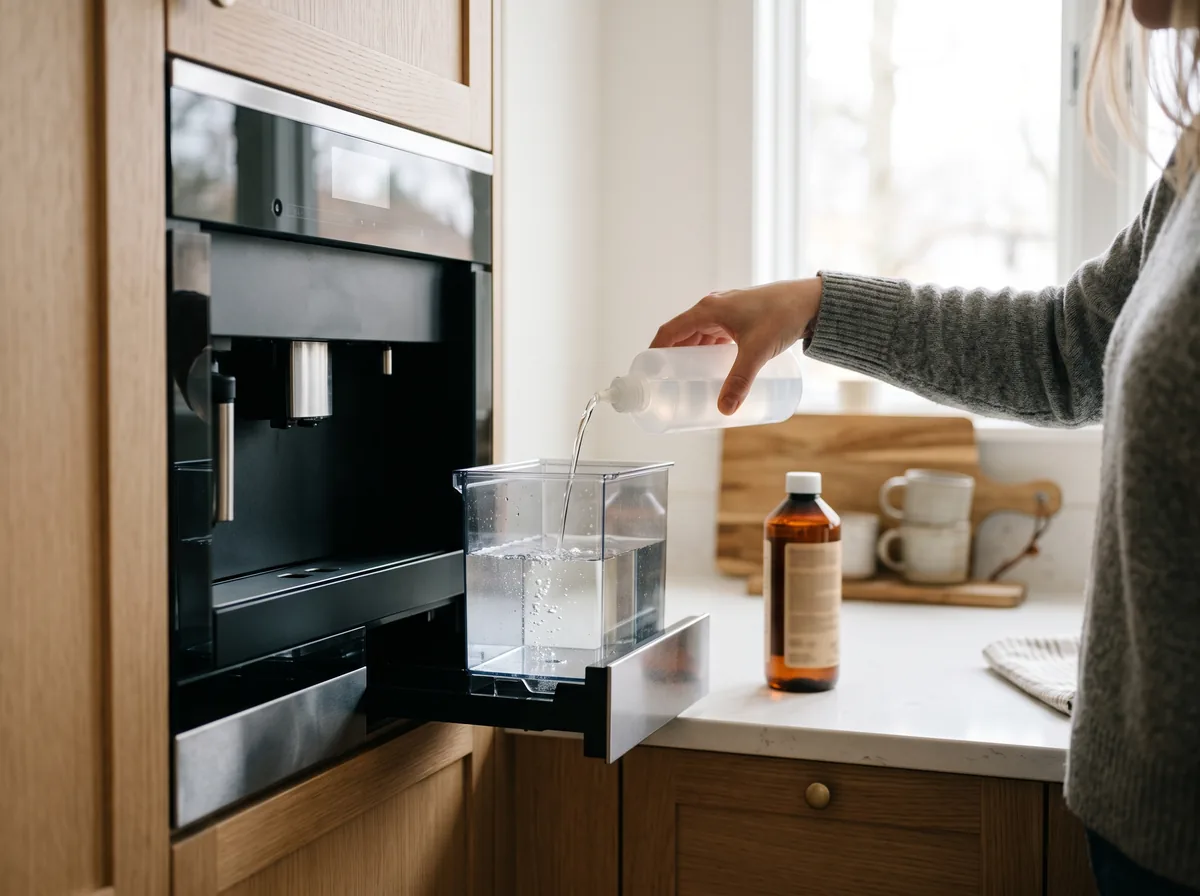
- Check the manual: Confirm your model’s specific descaling sequence and approved descaling solution.
- Prepare the machine: Remove the water filter, empty the drip tray, and ensure the portafilter or brew chamber is clear.
- Mix the solution: Dilute proper descaling solution with water in the reservoir according to package directions. Avoid vinegar, as it can damage rubber seals.
- Run the cycle: Initiate the automated descaling program or pass the solution through the water lines in controlled stages.
- Flush thoroughly: Run at least two full reservoirs of clean water through the machine to remove all residual solution.
- Reinstall filter: Reinsert a fresh water filter, pull an espresso shot, and verify extraction quality and pressure.
Pro tip
Schedule descaling dates on a calendar rather than relying on changes in coffee flavor. By the time flavor noticeably degrades, scale accumulation is already advanced.
When it is time to call a technician
While routine care handles most issues, mechanical or electrical faults require professional service. Contact a technician if you encounter:
- Inconsistent brewing temperatures or low extraction pressure after descaling.
- Active water leaks from the unit base or internal plumbing connections.
- Excessive pump noise or grinding sounds during extraction.
- Persistent error messages that remain after system resets.
- Electrical issues, such as tripped breakers or power failures.
Because built-in coffee machines are integrated custom appliances, repairing components like pumps, valves, or boilers is significantly more practical than replacing the entire unit.
Download the free quick guide
A quick-reference care schedule and descaling checklist for your built-in coffee machine.
Frequently Asked Questions
If your espresso still tastes flat after completing regular built-in coffee machine maintenance, the problem is likely internal. Max Appliance Repair Halifax provides professional service for built-in coffee machines across Halifax, Sackville, Bedford, and Tantallon and Timberlea. Reach out to our team to schedule a service visit.